
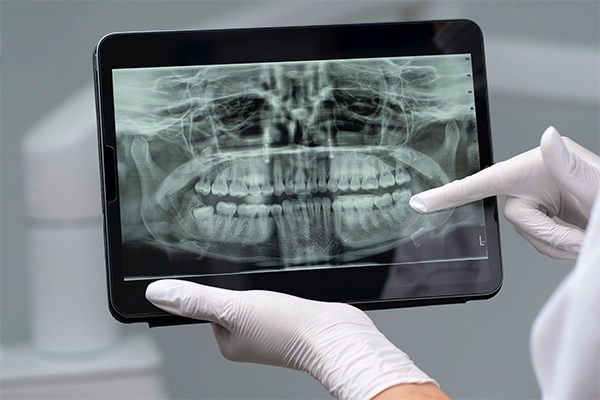
Cone-beam computed tomography (CBCT) is a popular imaging modality in dentistry for diagnosing and planning treatment of various oral diseases, as it produces detailed three-dimensional images of teeth, jawbones, and surrounding structures. The integration of artificial intelligence (AI) techniques has significantly enhanced the diagnostic value, as well as the precision and efficiency, of CBCT imaging.
This article reviews recent trends and practices of AI in dental CBCT imaging. AI has been used for lesion detection, malocclusion classification, buccal bone thickness measurement, as well as for the classification and segmentation of teeth, alveolar bones, jaws, landmarks, contours, and pharyngeal airways using CBCT images. Machine learning algorithms, deep learning, and super-resolution techniques are primarily employed for these tasks.
This review focuses on the potential of AI techniques to transform CBCT imaging in dentistry, improving both diagnosis and treatment planning. Finally, the challenges and limitations of artificial intelligence in dentistry and CBCT imaging are discussed.
Link: https://arxiv.org/abs/2306.03025


